
When a container loading report identifies a quantity mismatch, damaged packaging, or an unexplained seal change, the buyer needs a clear record before deciding what happens next. Record the requirement, the observation, the affected goods, and the evidence. Then identify who can authorize a correction or shipment decision. A discrepancy log connects these details so that a photograph, supplier explanation, and final instruction refer to the same issue.
This guide focuses on managing findings. Use it alongside your agreed inspection scope. It does not replace a packing plan, product inspection, or specialist cargo securing advice. The scope of any booked inspection must be agreed in advance.
1. Start Your Container Loading Report With the Reference
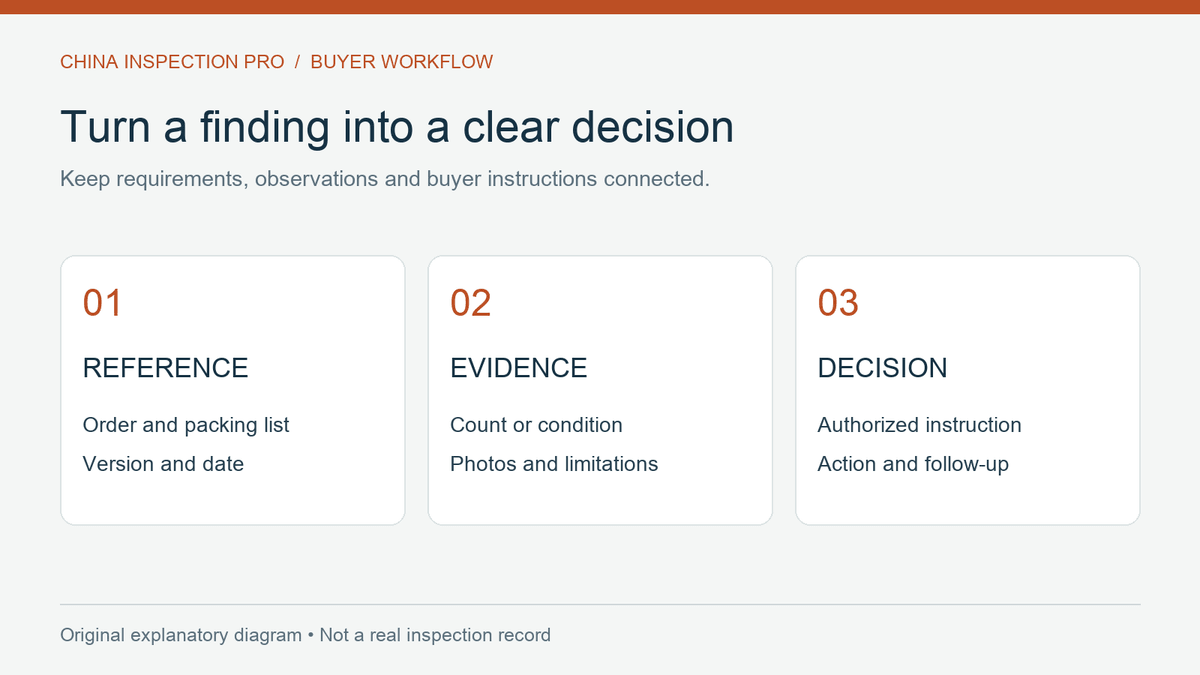
A useful discrepancy begins with the requirement that was not met. “Quantity looks wrong” leaves too much room for interpretation. “The packing list calls for 120 cartons of SKU A; the observed loading count records 118” gives the buyer a specific difference to investigate.
Before a container loading report, collect the purchase order, current packing list, product specifications, shipping marks, and any agreed packaging instructions. Identify the version and date of each document. If the supplier sends a revised packing list during loading, retain both versions and note who approved the revision. Do not quietly replace the original reference and erase the reason for the finding.
Separate a confirmed mismatch from an unanswered question. If the total cannot be reconciled because cartons were already loaded before the observer arrived, describe that limitation. An incomplete observation is not proof that the full shipment matches the order.
2. Use One Issue Number for Each Distinct Finding
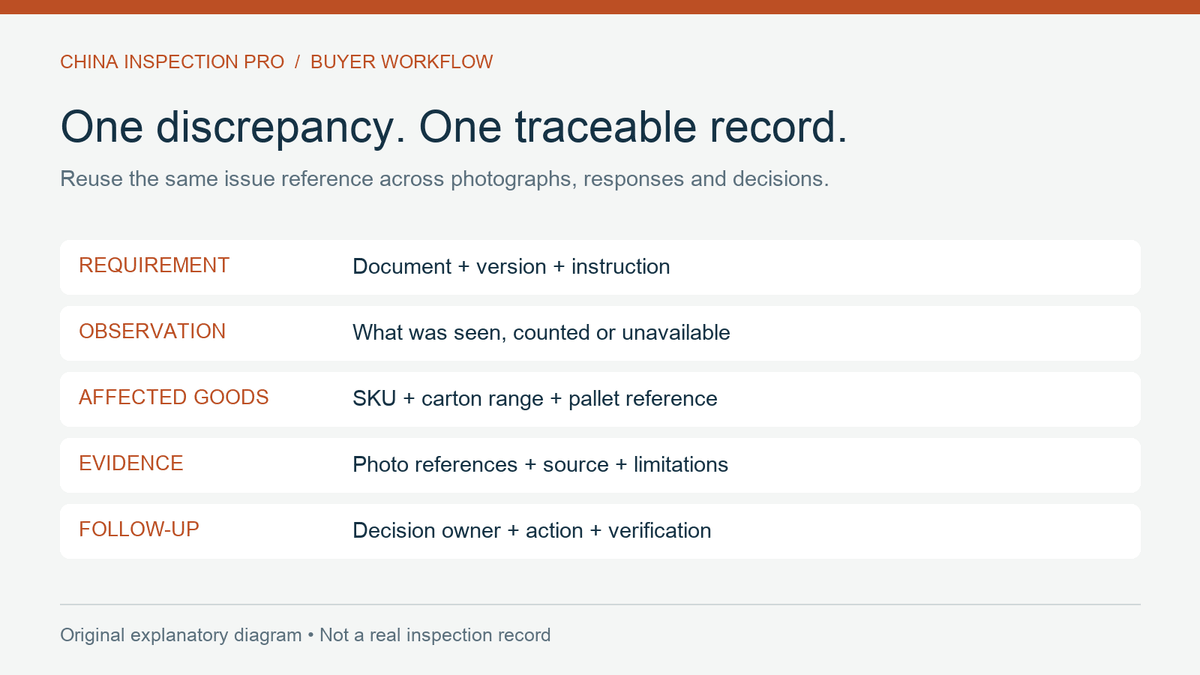
Assign a short issue number to each discrepancy. Use that number on photographs, written observations, supplier responses, and follow-up instructions. Several photographs of one damaged pallet belong to one issue unless they show separate problems requiring separate decisions.
A practical discrepancy log can use these fields:
Field: What to record
Issue reference: A unique number used throughout the record
Requirement: Document name, version, and relevant instruction
Observation: What was actually seen or counted
Affected goods: SKU, carton range, pallet, or other identifier
Evidence: Photograph references and relevant records
Proposed action: Supplier proposal, clearly marked as proposed
Decision owner: Person authorized to accept or request correction
Follow-up: Action taken and verification limitations
Keep observations separate from conclusions. “Three cartons have wet outer surfaces” describes evidence. “The entire shipment has water damage” is a broader conclusion requiring additional support. The same distinction applies when the inspector observes dents, unusual odors, torn wrapping, or an unreadable label.
3. Reconcile Quantity Differences Without Losing Traceability
For a quantity discrepancy, first identify what was counted: individual units, cartons, pallets, or another handling unit. A carton count does not establish the number of products inside every carton. Record any assumptions about units per carton and whether those assumptions were checked within the agreed scope.
Compare like with like. A packing list showing ten pallets cannot be reconciled directly against a count of 400 cartons without the pallet breakdown. Mixed SKUs require a separate breakdown so that a correct overall total does not conceal the wrong product mix.
Ask the supplier to explain the difference using records that can be connected to the goods. Possible explanations may include a revised order quantity, rejected cartons left outside the loading area, or a counting error. These are possibilities to investigate, not explanations to accept automatically.
After a correction, record the revised count and how it was obtained. If access prevents recounting goods already inside the container, state that clearly. A container loading report should preserve the difference between a witnessed recount and a supplier's written confirmation.
4. Document Packaging Findings at the Right Level
Packaging findings need both context and detail. A close-up can show a torn carton, while a wider photograph can identify its location and the surrounding goods. Use carton numbers, shipping marks, or pallet labels where available. Avoid including unrelated confidential order information in evidence shared beyond the authorized participants.
Describe the condition rather than predicting the outcome. Record crushed corners, broken straps, open seams, visible moisture, or displaced stretch wrap. Whether a package remains suitable for the intended transport may require the buyer's packaging requirements and further technical assessment.
If cartons are replaced, identify which cartons were changed and whether labels and quantities were checked again. Replacement packaging can introduce a second discrepancy when a correct product receives an incorrect shipping mark. A container loading report follow-up should therefore connect the corrective action to the original requirement.
Keep product quality and packaging condition distinct. An intact outer carton does not prove that the product inside meets specifications. Likewise, visible packaging damage does not by itself establish the condition of every enclosed unit. Request additional checks when the buyer needs evidence beyond the booked loading scope.
5. Record Container and Seal Concerns Precisely
For container-related concerns, record the container number and the visible condition relevant to the issue. Note when the observation occurred and whether loading had started. Do not describe a visual check as structural certification or imply compliance with an unspecified “ISO checklist.”
Seal records should connect the physical seal to the container and shipment documents. Where the agreed loading supervision scope includes witnessing sealing, record the seal number observed and any difference from the expected number. Distinguish witnessing installation from inspecting a seal already in place.
If a seal is changed, record the old and new numbers, the stated reason, and who authorized the change. Do not infer tampering solely from a numbering discrepancy. Equally, do not dismiss an unexplained difference because the replacement looks intact. The buyer needs an accountable explanation and a clear record.
An inspection observation does not determine customs clearance, carrier acceptance, or insurance coverage. Refer questions in those areas to the responsible parties rather than making unsupported conclusions in the discrepancy log.
6. Close the Issue With a Recorded Decision
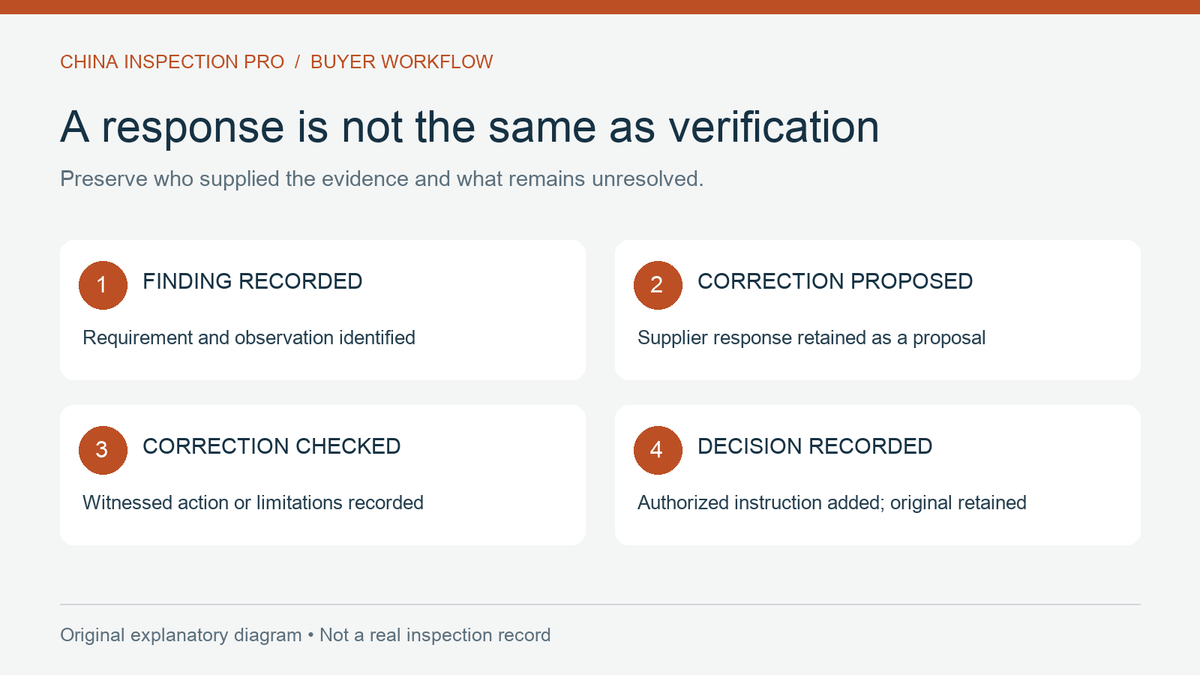
A container loading report finding becomes useful when the buyer can see what remains unresolved. Give each issue a clear status such as awaiting explanation, correction proposed, correction observed, or decision recorded. Avoid a single “passed” label that hides several open questions.
The buyer's instruction should identify the issue, required action, decision owner, and evidence needed for closure. For example, a request to replace identified damaged cartons should say whether revised labels, photographs, or a recount are needed. Confirm any additional inspection arrangements separately; do not assume that a revisit is included.
Retain the original finding when an issue is closed. Add the corrective action and supporting evidence rather than deleting the earlier observation. If loading proceeds with an unresolved discrepancy, record the authorized instruction and the remaining limitation. The log supports a decision; it does not guarantee the shipment's condition or transfer commercial responsibility.
FAQ
Use these questions when reviewing a container loading report with your supplier and the person responsible for shipment decisions. Agree the scope of any additional verification before treating an unresolved point as closed.
1. Does a discrepancy automatically mean the shipment must stop?
No universal decision follows from every finding. The buyer should assess the agreed requirements, available evidence, and relevant contractual arrangements. Urgent concerns should be escalated to the designated decision owner. A container loading report provides observations within its scope rather than making every commercial decision for the buyer.
2. Can the supplier close an issue by sending a photograph?
A photograph may support a response, but its value depends on whether it identifies the affected goods and demonstrates the requested action. Record who supplied it and whether an inspector witnessed the correction. Do not present supplier evidence as independently observed verification. Keep the original photograph and its reference in the issue record so the buyer can identify what it does and does not establish.
3. Should loading findings be combined with a product inspection report?
They can be cross-referenced, but preserve their different scopes and dates. A product inspection may assess selected units against agreed criteria; a container loading report records loading-related observations. Neither should be described as checking something that was outside its actual scope.
4. What if the discrepancy cannot be resolved during loading?
Record the unresolved point, evidence limitations, and person responsible for the next decision. Keep the supplier's explanation separate from verified observations. Agree any further checks before treating the issue as closed. If access or timing prevents verification, retain that limitation beside the decision rather than removing the original finding.
Discuss Your Loading Inspection Requirements
Prepare your packing list, product identifiers, loading location, expected timing, and evidence requirements before requesting an inspection. A useful container loading report begins with these agreed requirements. Compare the available product inspection services to select the appropriate stage. Share the discrepancies you want the agreed scope to address when you request a quote. Inspection arrangements and scope require booking confirmation.